 Français
Buying a SIM card at Casablanca airport
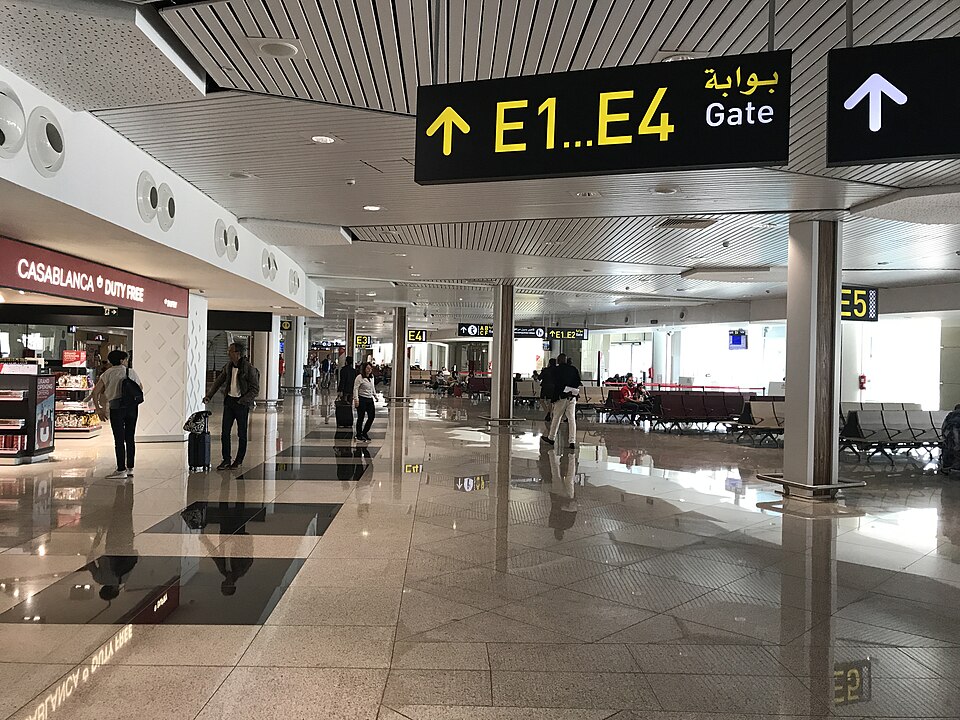
Photo : Hamza Izourane, CC BY-SA 4.0, via Wikimedia Commons

The airport counter is the shortest route to a Moroccan line. It also has its hours, its queues and its limits.
Mohammed V is the country's main gateway. Past immigration and baggage, the arrivals area holds mobile operator counters. For many visitors this is where the connectivity question gets settled, in a few minutes, before even taking the train or a taxi into Casablanca.
What you need in hand
Only one document really counts: your passport, the original. The prepaid line is registered in your name, and the seller enters your identity details into the operator's system. A photocopy, a photo on your phone or a driving licence will not replace it.
Bring a means of payment too. Some counters accept cards, others do not, and a first dirham withdrawal at the terminal cash machine usually makes the rest of the trip easier.
- The original passport, the one you have just shown at the border.
- An unlocked phone, able to accept a card from another operator.
- The tool to open the SIM tray, or ask the seller, who has one.
- Cash, in case the card terminal is down.
Opening hours, the real constraint
Airport counters follow flight traffic rather than fixed hours. A midday arrival finds everything open. A three in the morning arrival can meet closed shutters, particularly outside the tourist season.
That is not a problem in itself. City centre operator shops open in the morning, with more choice, shorter queues, and staff who take the time to explain the options. If you land at night and your accommodation has Wi-Fi, waiting until the next morning is often the better call.
Activation, to settle before you leave the counter
Activating a prepaid line is not always instant. Depending on the operator and system load, it takes anywhere from seconds to a few minutes. The useful habit is simple: do not walk away until you have checked three things in front of the seller.
- The network is attached: the operator name appears at the top of the screen.
- A call goes out: dial a travelling companion's number.
- Data works: load a web page with Wi-Fi off.
If any of the three fails, the seller fixes it there and then. Once you are in the taxi, you will have to come back or call a customer service line in a language you may not speak.
What to ask before you pay
Packs sold at the counter usually mix call credit, a data allowance and a validity period. Three questions prevent most misunderstandings: what exactly the pack contains, how long it stays valid, and what happens once the data allowance is used up. Answers to that last one vary: cut off, throttled, or eating into the remaining call credit.
Finally, write your Moroccan number down somewhere other than the phone. In a notebook, on a boarding pass, in a message to someone at home. The day the handset breaks or disappears, that number is the only thing that lets you recover the line in a shop.